So, if you wanted really informed commentary on the Theresa May/Brodie Clark upfuck (now there's some slash), where would you go? Wouldn't you want to ask a distinguished civil servant? I bet you would. Specifically, a career immigration officer with 39 years in the service. Who's just retired, and is therefore allowed to be snarky.
Now you can! Because my dad has a blog.
I'll always remember the day he brought home the video briefcase. I think it's safe to tell the story now.
Showing posts with label personal history. Show all posts
Showing posts with label personal history. Show all posts
Friday, November 18, 2011
Sunday, May 30, 2010
some memories of west Bradford
Well, this is grim. Intelligent comment is to be found here, in Jamie Kenny's interview with David Wilson.
There's also a nasty surprise; according to Chris Williams, who actually met him, he was working on precisely that question, whether the 19th century's apparently low murder rate was explained by the fact that the victims of Victorian murderers were more likely to just vanish rather than be reported to the police.
Well, Yorkshire scores another historic first. I used to work off Thornton Road, and also in Dockfield Mill in Shipley; they're both places where the death of the textile industry left behind a lot of rotting mill buildings that then got re-purposed by all kinds of odd little businesses. Dockfield Road is less so, more traditionally industrial, and there are terraces of classic working-class homes part of the way along it, just about where the pie van parked up when I was working in an envelope factory.
Thornton Road, though, is nothing but old mills and warehouses, now become small engineering workshops, garages, curry wholesalers and the like, a sort of Yorkshire favela development. The district, in the valley between the university and Great Horton Road on one side and Manningham on the other, is not identified with any community - hardly anyone lives there, they only work there or cut through the backstreets to avoid the inner ring road. (Oddly enough, the anarchist 1 in 12 Club is round there too, up the hill towards Westgate. And so are the Quakers.)
The vice trade moved down there after the girls were driven out of Lumb Lane, further uphill (uphill and downhill are always important directions in Bradford) and northwards in the centre of Manningham; this event has been variously considered to have been an example of community vigilantism, Islamism, and also to be associated with control of the drugs market and black/Asian tension, which later led to serious violence. In the 1990s, you could drive past any time of the night or day and see drug dealing going on - I also remember that one of the corner shops still had a sign outside advertising paraffin.
When I worked in an industrial bakery further up the road towards Lidget Green (and its Pathan community), and would walk back down towards the city centre, stinking of roasted high fructose syrup and cream-style product, I remember passing a huge billboard for Coca-Cola with some pouting model reclining across it. Some Four Lions character had decided to deface this example of imperialist decadence and fitna, but rather than aiming for the cleavage or the thighs, or for that matter the Coke, they'd chosen to tear down the face.
Would you say that serial killers are a kind of negative indicator of the health of society in the sense that the fewer victims there are, the better society functions?
Serial killers function best within fractured communities, where people don’t look out for each other, and when the gap between those who have and those who have not is wide. In cultures such as these no one really bothers to notice the elderly neighbour living by themselves, or the kids who are homeless because they don’t view these people as having value, or being connected to their lives. Serial killers also exploit homophobia and our laws related to those young people who sell sexual services. When I was in Ipswich in 2006 I used to point out that less than an hour’s flight away was Amsterdam and that no Dutch serial killer had ever targeted prostitutes.
There's also a nasty surprise; according to Chris Williams, who actually met him, he was working on precisely that question, whether the 19th century's apparently low murder rate was explained by the fact that the victims of Victorian murderers were more likely to just vanish rather than be reported to the police.
Well, Yorkshire scores another historic first. I used to work off Thornton Road, and also in Dockfield Mill in Shipley; they're both places where the death of the textile industry left behind a lot of rotting mill buildings that then got re-purposed by all kinds of odd little businesses. Dockfield Road is less so, more traditionally industrial, and there are terraces of classic working-class homes part of the way along it, just about where the pie van parked up when I was working in an envelope factory.
Thornton Road, though, is nothing but old mills and warehouses, now become small engineering workshops, garages, curry wholesalers and the like, a sort of Yorkshire favela development. The district, in the valley between the university and Great Horton Road on one side and Manningham on the other, is not identified with any community - hardly anyone lives there, they only work there or cut through the backstreets to avoid the inner ring road. (Oddly enough, the anarchist 1 in 12 Club is round there too, up the hill towards Westgate. And so are the Quakers.)
The vice trade moved down there after the girls were driven out of Lumb Lane, further uphill (uphill and downhill are always important directions in Bradford) and northwards in the centre of Manningham; this event has been variously considered to have been an example of community vigilantism, Islamism, and also to be associated with control of the drugs market and black/Asian tension, which later led to serious violence. In the 1990s, you could drive past any time of the night or day and see drug dealing going on - I also remember that one of the corner shops still had a sign outside advertising paraffin.
When I worked in an industrial bakery further up the road towards Lidget Green (and its Pathan community), and would walk back down towards the city centre, stinking of roasted high fructose syrup and cream-style product, I remember passing a huge billboard for Coca-Cola with some pouting model reclining across it. Some Four Lions character had decided to deface this example of imperialist decadence and fitna, but rather than aiming for the cleavage or the thighs, or for that matter the Coke, they'd chosen to tear down the face.
Sunday, June 28, 2009
yet more roads
Another On Roads thing is the special role of the North; indeed, as he points out, it's the construction of the M62 that made the North of England a sensible geographical construct rather than an awkward stereotype that uneasily combined Lancashire and Yorkshire.
And so much early motorway building started up north; you have the role of tireless boosters and chief engineers James Drake in Lancashire and Stuart Lovell in West Yorkshire, the A580 East Lancs Road (the very first), the Preston bypass, the Manchester and Leeds urban motorways, and the epic engineering drama of the M62 itself. As its chief engineer put it, "for seven years we ate mud, walked in mud, sat in mud and were aware of mud, and there was mud in the sandwiches".
This would have far-reaching consequences; not so long ago, I recall some journalist or other saying that they were very surprised, on going to Yorkshire to report the miners' strike, to find all these huge roads leading everywhere. They would, of course, be a major theatre of that conflict, and a few years later, the rave/drugs wars as well. Later still, both the protestors and the Sheffield-based professional climbers hired to get them out of trees would go that way.
Can it be true that my mother and I ran the length of our local bypass, twice, wearing donkey jackets, boots, hi-viz vests, and carrying shovels? I rather think it is. It was a fearsomely hot day, and I don't think we were even formally protesting, although, in a sense, what else were we doing?
Which reminds me; one of the very first road protests in the UK, against the Westway in the late 60s, or rather in favour of playgrounds under it, was started by someone who'd been reading about Guy Debord and was looking for something to start a row about.
And so much early motorway building started up north; you have the role of tireless boosters and chief engineers James Drake in Lancashire and Stuart Lovell in West Yorkshire, the A580 East Lancs Road (the very first), the Preston bypass, the Manchester and Leeds urban motorways, and the epic engineering drama of the M62 itself. As its chief engineer put it, "for seven years we ate mud, walked in mud, sat in mud and were aware of mud, and there was mud in the sandwiches".
This would have far-reaching consequences; not so long ago, I recall some journalist or other saying that they were very surprised, on going to Yorkshire to report the miners' strike, to find all these huge roads leading everywhere. They would, of course, be a major theatre of that conflict, and a few years later, the rave/drugs wars as well. Later still, both the protestors and the Sheffield-based professional climbers hired to get them out of trees would go that way.
Can it be true that my mother and I ran the length of our local bypass, twice, wearing donkey jackets, boots, hi-viz vests, and carrying shovels? I rather think it is. It was a fearsomely hot day, and I don't think we were even formally protesting, although, in a sense, what else were we doing?
Which reminds me; one of the very first road protests in the UK, against the Westway in the late 60s, or rather in favour of playgrounds under it, was started by someone who'd been reading about Guy Debord and was looking for something to start a row about.
Tuesday, June 09, 2009
better left as an example to others
IPC sub-editors dictate our nation's youth. Ha, been a while since I heard that one. There is talk at the Meadi Grauniad that someone wants to re-open The Face. I can almost feel the unusually stiff square binding and remarkably heavy paper already. It was like being a member of a secret league against wankers.
Actually, this isn't a good idea. Don't do it, man; think of the 10,000 word 5-part stinker review I'll have to fill up the blog with. I'm measuring up the space already. The disappointment and bitterness and drunken nostalgia; it won't be pretty. Especially if you're planning to rehire this guy:
Eh, just a fart then.
But distribution. Now that's the tough one. That's the one the bastards have always controlled.
Update: Laughed.
Actually, this isn't a good idea. Don't do it, man; think of the 10,000 word 5-part stinker review I'll have to fill up the blog with. I'm measuring up the space already. The disappointment and bitterness and drunken nostalgia; it won't be pretty. Especially if you're planning to rehire this guy:
"How do you maintain the cachet if you give it away for free?" asks one former editor. "Dazed, Vice, etc would murder it. Like Shortlist, it would be read by Polish cleaning ladies on the way home from the 4am shift.
Eh, just a fart then.
The subs [subscription] issue is equally tricky. How do you sell the subs? Who wants it? Or is it controlled subs - free to trendy shops - in which case it has no editorial teeth and no budget."This is true, however; once you get into someone else paying for your distribution with a magazine, your editorial independence and therefore, in the long run, your relevance and quality are going down the pan. The old crack about the freedom of the press being restricted to those who owned one was never that clever; there is a long tradition of the most surprising publications running off the same press.
But distribution. Now that's the tough one. That's the one the bastards have always controlled.
Update: Laughed.
Saturday, May 09, 2009
an enterprise of great advantage, but none to know what it is
Iduntity cards. Jamie quotes a Computer Weekly article on a "business breakfast" with Jacqui Smith as proof of private sector interest in the project. A business breakfast with Jacqui Smith; the horror. I remember that a "breakfast briefing" with a certain mobile industry luminary who would always have it at Claridges when he was in London always consisted of an interview and no breakfast, but at least it wasn't no breakfast with Jacqui Smith.
You may remember that the government has consistently refused to cost either the card readers, none of which exist, or the enrolment process, by attributing it to the private sector fairy.
However, no company has ever gone public and stated their interest in the scheme. So the CW story is interesting because it says that
CW has been historically the absolute best news source on ID cards, but I find this a little strange, and it strikes me as sounding a lot like the official line. It also doesn't say if any of the people who expressed an interest were present, or if so, whether they expressed it at the time.
However, there is some interesting news in here; it seems that there is a new PR strategy afoot.
Interestingly, those people who have expressed any thoughts from the private sector sound quite different. Here's another CW story:
You may remember that the government has consistently refused to cost either the card readers, none of which exist, or the enrolment process, by attributing it to the private sector fairy.
However, no company has ever gone public and stated their interest in the scheme. So the CW story is interesting because it says that
Post offices, pharmacists, supermarkets, high street chemists, local authorities and universities have expressed an interest in taking the fingerprints and photos of applicants for ID cards.In fact quite a lot of local authorities and universities have expressed refusal to cooperate in the scheme. But no company is actually mentioned in the story; there are no names, nor any suggestion of what constituted "interest".
CW has been historically the absolute best news source on ID cards, but I find this a little strange, and it strikes me as sounding a lot like the official line. It also doesn't say if any of the people who expressed an interest were present, or if so, whether they expressed it at the time.
However, there is some interesting news in here; it seems that there is a new PR strategy afoot.
She introduced a well-made and expensive film which portrayed the ID card as a designer brand. "Identity: what does it mean? Sometimes it's about individuality, to say that you are you."...It sounds a good business arrangement, especially for post offices, which struggle to exist.It's a twofer - aspirational property-bubble bollocks plus populist-cum-Prince Charles sentimentality about sub-post offices. Sick bucket to the guy with the laptop!
Interestingly, those people who have expressed any thoughts from the private sector sound quite different. Here's another CW story:
Confederation of British Industry deputy director general John Cridland questioned the robustness of the enrolment process, saying, "One sticking point is the requirement on the private sector to provide information that can be used to verify data held on the national register without making clear who will be liable for the accuracy of the information and how it will be used. The government must address this as a matter of urgency if it wants to build confidence in the scheme."By the way, the Manchester trial will not actually provide any cards, because neither they nor the NIR will be ready. You'll be able to "pre-register", which sounds a lot like paying £30 for sweet fuck all. I'm more than interested to know exactly who will sign up.
The British Bankers Association said the banking industry had no plans to use biometrics to authenticate customers or transactions.
Sunday, March 08, 2009
alternative Yorkshire
25 years; the strike was the first political event, indeed one of the first events, I actually remember. At least I remember power cuts and TV news broadcasts with the number of weeks the miners had been out counting up. After that, I recall Chernobyl - they set up a radiation monitor in the car park and my mother was interviewed on TV in front of it - and Gorbachev (we had a photo of him, complete with birthmark!), and then, it all starts rolling past.
Years later I actually met Scargill, at a conference of economics students; it was some testimony to his oratory that he was cheered to the echo by an audience that included about fifty per cent Young Conservatives. Perhaps it was the other fifty per cent. The organisers certainly aimed for stimulation - the other keynote speakers were John Redwood and Patrick Minford, of all people. Around the same time I met my first Scargill-hater, who actually was an ex-miner. History is like that.
Here is the man himself's version. I don't know the detailed history well enough to criticise it, although it strikes me that his idea of cutting off the coal supply to the steel industry, a sort of John Robb-ish cascade-failure attack, was based on a fundamentally false assumption. Namely, it assumed Thatcher cared what happened to the steelworks; as we now know, she was just as keen to screw them as she was the miners, and not much better with regard to the downstream steel-consuming industries either.
But one thing I don't think anyone has mentioned about this is that whatever had happened in 1984, there could only ever have been a stay of execution for ten years. In 1995, the starting gun for serious climate fear was fired when the IPCC scenarios crossed the 95% confidence interval into significance; and as James Hansen says, it's the coal. Essentially lumps of carbon, with some added toxic heavy metals for laughs, and there's so much of the stuff that we won't run out before we cook the planet.
Consider the alternate history for a moment; NACODS walk out as well, the government is forced to give in. Thatcher, of course, doesn't quit, but there is either a 1922 Committee coup or else she loses the 1987 election, or perhaps there is a repeat of 1974 - she calls an election for a mandate to take on the miners again, and loses. Neil Kinnock walks into Downing Street, either in a Labour government or a coalition with the Liberals and SDP.
Where do we go from here? The TUC-driven European turn in the Labour Party hasn't happened yet, but neither has the D-Mark shadowing and ERM fiasco. The Labour Party has taken a goodly dose of the new social movements, as in the original time-line, but the prestige of the NUM on the Left would be immense.
But whatever happens in the Kinnock-Steel government, at some point in 1995 the Chief Scientific Advisor walks into the Cabinet Room, and about ten minutes later, all hell breaks loose. After all, in this scenario we've been merrily burning much more coal than in the original timeline for the last ten years, and the coal lobby is the strength of the Left.
The political implications would be more than weird. The activist Left, all other things being equal, is heavily green-influenced, so it ends up against the miners. The mainstream Labour Party is wildly conflicted. And the rightwing science-dodger ecosystem has no choice but to support the miners; Anthony Browne and friends in Doncaster, probably with bags of Exxon-provided cash. Thrill as they try to tack between screwing the government and keeping their North Sea investments.
So the strike 2.0 happens in the late 90s/early 2000s, with mobile phones and the Internet on the protesters' side (flashmobs at Ferrybridge), tasers and pervasive CCTV on the police side, and all the party affiliations surreally flipped. God knows how that would have played out.
Someone ought to write the book.
One thing this brings up is just how necessary social democracy is; sometimes, it's not enough to be right, and huge impersonal forces are going to work their will, like the steadily rising concentration of carbon dioxide in the atmosphere. And then, it's up to the society we create around ourselves whether the changes that will happen will be humane or brutal and tragic.
Years later I actually met Scargill, at a conference of economics students; it was some testimony to his oratory that he was cheered to the echo by an audience that included about fifty per cent Young Conservatives. Perhaps it was the other fifty per cent. The organisers certainly aimed for stimulation - the other keynote speakers were John Redwood and Patrick Minford, of all people. Around the same time I met my first Scargill-hater, who actually was an ex-miner. History is like that.
Here is the man himself's version. I don't know the detailed history well enough to criticise it, although it strikes me that his idea of cutting off the coal supply to the steel industry, a sort of John Robb-ish cascade-failure attack, was based on a fundamentally false assumption. Namely, it assumed Thatcher cared what happened to the steelworks; as we now know, she was just as keen to screw them as she was the miners, and not much better with regard to the downstream steel-consuming industries either.
But one thing I don't think anyone has mentioned about this is that whatever had happened in 1984, there could only ever have been a stay of execution for ten years. In 1995, the starting gun for serious climate fear was fired when the IPCC scenarios crossed the 95% confidence interval into significance; and as James Hansen says, it's the coal. Essentially lumps of carbon, with some added toxic heavy metals for laughs, and there's so much of the stuff that we won't run out before we cook the planet.
Consider the alternate history for a moment; NACODS walk out as well, the government is forced to give in. Thatcher, of course, doesn't quit, but there is either a 1922 Committee coup or else she loses the 1987 election, or perhaps there is a repeat of 1974 - she calls an election for a mandate to take on the miners again, and loses. Neil Kinnock walks into Downing Street, either in a Labour government or a coalition with the Liberals and SDP.
Where do we go from here? The TUC-driven European turn in the Labour Party hasn't happened yet, but neither has the D-Mark shadowing and ERM fiasco. The Labour Party has taken a goodly dose of the new social movements, as in the original time-line, but the prestige of the NUM on the Left would be immense.
But whatever happens in the Kinnock-Steel government, at some point in 1995 the Chief Scientific Advisor walks into the Cabinet Room, and about ten minutes later, all hell breaks loose. After all, in this scenario we've been merrily burning much more coal than in the original timeline for the last ten years, and the coal lobby is the strength of the Left.
The political implications would be more than weird. The activist Left, all other things being equal, is heavily green-influenced, so it ends up against the miners. The mainstream Labour Party is wildly conflicted. And the rightwing science-dodger ecosystem has no choice but to support the miners; Anthony Browne and friends in Doncaster, probably with bags of Exxon-provided cash. Thrill as they try to tack between screwing the government and keeping their North Sea investments.
So the strike 2.0 happens in the late 90s/early 2000s, with mobile phones and the Internet on the protesters' side (flashmobs at Ferrybridge), tasers and pervasive CCTV on the police side, and all the party affiliations surreally flipped. God knows how that would have played out.
Someone ought to write the book.
One thing this brings up is just how necessary social democracy is; sometimes, it's not enough to be right, and huge impersonal forces are going to work their will, like the steadily rising concentration of carbon dioxide in the atmosphere. And then, it's up to the society we create around ourselves whether the changes that will happen will be humane or brutal and tragic.
Sunday, January 18, 2009
you can't blame the youth of today
I'm increasingly annoyed by official-media consensus that young people will suffer more than anyone else from the recession. Not that I especially doubt this; I doubt the reasoning, which appears to be that they've all gone soft and they're not like we were in my day. As a general principle, I believe this is usually wrong, being unfalsifiable and all, and also being a projection of one's own fear of death.
But on the specific case, I dispute the facts. It wasn't a great time to be young; by definition, when you're young your only source of income is wages, and the labour share of national income has been flat for years. Indeed, real wages have been flat for donkey's years. A personal example; I was offered a job at Euromoney Institutional Investor on a salary of £16,000 per year, but on a six-month contract. Even at Mobile Comms International, it was a while before I was earning more an hour than I had been Pritt-Sticking the flaps of substandard envelopes whilst waiting for Bradford City's second season in the Premier League. However, it improved, and I'm well aware I learnt a hell of a lot there. I spent around 20% of my post-tax income on my railway season ticket.
At the same time, both rents and house prices shot through the roof. This was crucial; the whole idea that home-owners got rich from the rise in the value of their property was dependent on someone buying it from them. People retiring and trading-down was a factor that had to match people trading-up; at bottom, there had to be first-time buyers, who are generally young. The net effect of right-to-buy and the great property bull run was to transfer wealth from first-time buyers to sellers; in the aggregate, the Bank of Mum and Dad was borrowing from the kids.
And, of course, there were tuition fees, top-up fees, and for a cohort including me, both the fees and no student grants. Meanwhile, we were told we ought to consume and keep the economy going, take part in the creative industries and volunteer, but do this while joining the job market, to borrow heavily to pay for further and higher education, to accumulate savings on deposit, to save for retirement (or in other words, to pay others' pensions), that we were a bunch of unserious greenies, that we were politically apathetic, that we would face the consequences of climate change (after it became respectable to worry), that we were all drug fiends and music characterised by repetitive beats was against the law, that we weren't getting on the housing ladder, that we were borrowing too much money (this from the people who brought you Citigroup) and that people who were slightly younger ought to be punished for playing hooky in order to demonstrate against the Iraq war. To cap the lot, we were told we were drinking too much. If we were, who could guess why?
Actually, if I was younger, I think I'd be delighted by the crisis. I've got plenty of schadenfreude and indeed klammheimliche Freude as it is. Things I need (somewhere to live, somewhere to do interesting things) are likely to get cheap, and me minus five years doesn't care about the cost of huge cars or Vertu mobile phones because he doesn't have any money but does have more sense. The strength of ideological drivel is reduced; there has been a catastrophe in the intellectual environment, a meteorite has plunged into the credibility of the market monkeys, and as usual, this is followed by an adaptive radiation, a blossoming of new species into new or newly unoccupied niches.
Even when me minus five years starts working for the clampdown, at least he or she gets to save for their retirement in a low asset price world, and to bore me minus ten years with tales about how they staged bio-hacking parties in abandoned bank C-level offices, and how this gets them off inevitably joining the Conservative Party, or functional equivalent. Which is, after all, the claim to intellectual legitimacy of most of the people who spent all that time ordering me to simultaneously save, work, borrow, volunteer, spend, rebel, invest, and obey.
I suppose they must have meant one of those.
But on the specific case, I dispute the facts. It wasn't a great time to be young; by definition, when you're young your only source of income is wages, and the labour share of national income has been flat for years. Indeed, real wages have been flat for donkey's years. A personal example; I was offered a job at Euromoney Institutional Investor on a salary of £16,000 per year, but on a six-month contract. Even at Mobile Comms International, it was a while before I was earning more an hour than I had been Pritt-Sticking the flaps of substandard envelopes whilst waiting for Bradford City's second season in the Premier League. However, it improved, and I'm well aware I learnt a hell of a lot there. I spent around 20% of my post-tax income on my railway season ticket.
At the same time, both rents and house prices shot through the roof. This was crucial; the whole idea that home-owners got rich from the rise in the value of their property was dependent on someone buying it from them. People retiring and trading-down was a factor that had to match people trading-up; at bottom, there had to be first-time buyers, who are generally young. The net effect of right-to-buy and the great property bull run was to transfer wealth from first-time buyers to sellers; in the aggregate, the Bank of Mum and Dad was borrowing from the kids.
And, of course, there were tuition fees, top-up fees, and for a cohort including me, both the fees and no student grants. Meanwhile, we were told we ought to consume and keep the economy going, take part in the creative industries and volunteer, but do this while joining the job market, to borrow heavily to pay for further and higher education, to accumulate savings on deposit, to save for retirement (or in other words, to pay others' pensions), that we were a bunch of unserious greenies, that we were politically apathetic, that we would face the consequences of climate change (after it became respectable to worry), that we were all drug fiends and music characterised by repetitive beats was against the law, that we weren't getting on the housing ladder, that we were borrowing too much money (this from the people who brought you Citigroup) and that people who were slightly younger ought to be punished for playing hooky in order to demonstrate against the Iraq war. To cap the lot, we were told we were drinking too much. If we were, who could guess why?
Actually, if I was younger, I think I'd be delighted by the crisis. I've got plenty of schadenfreude and indeed klammheimliche Freude as it is. Things I need (somewhere to live, somewhere to do interesting things) are likely to get cheap, and me minus five years doesn't care about the cost of huge cars or Vertu mobile phones because he doesn't have any money but does have more sense. The strength of ideological drivel is reduced; there has been a catastrophe in the intellectual environment, a meteorite has plunged into the credibility of the market monkeys, and as usual, this is followed by an adaptive radiation, a blossoming of new species into new or newly unoccupied niches.
Even when me minus five years starts working for the clampdown, at least he or she gets to save for their retirement in a low asset price world, and to bore me minus ten years with tales about how they staged bio-hacking parties in abandoned bank C-level offices, and how this gets them off inevitably joining the Conservative Party, or functional equivalent. Which is, after all, the claim to intellectual legitimacy of most of the people who spent all that time ordering me to simultaneously save, work, borrow, volunteer, spend, rebel, invest, and obey.
I suppose they must have meant one of those.
Saturday, September 27, 2008
Petrov Day
25 years ago today I was a three year old boy, living in a village in the Yorkshire Dales, from where you could see the golfball aerials at the NSA's Menwith Hill base. Later, people I knew well would protest it for ages, and a man who was supposedly an engineer for LockMart there lived next door.
Via Charlie Stross, today is Stanislas Petrov day. As a Soviet air defence forces colonel, he was in charge of monitoring their satellite early warning system when it indicated five incoming missiles. But he was well aware of the system's possible failings, and the strategy the US was expected to pursue - after all, what on earth would be the point of firing only five missiles, on a polar trajectory that the Molniya satellites would detect?
And so he declined to give the warning, knowing that if he was wrong, the radar line would light up with panic soon enough. The phones certainly did; they complained he hadn't filled in the station log right, to which he said that he couldn't because he'd had a phone in each hand all night. Of course, the radars didn't go off because there were no missiles - when the ideologues and bureaucrats handed the issue to serious scientists, they worked out that it was an inherent flaw in the system's design, connected with the unusual orbit of the satellites and rare conditions in the upper atmosphere. A false positive could have happened at any time.
That didn't wash with the Karlo Rovskis; they sacked Petrov, who had anyway had a nervous breakdown (who wouldn't?) not long afterwards.
Petrov's heroic success was based on a few things; the first was his sound understanding of the machines. He didn't need to ask the experts or believe the big computer. The second was that he understood the political and grand strategic situation. It made no sense to send five rockets. The third was that he feared what the buggers might do anyway; yes, it might be clear that nobody would send five rockets, and anyway the radars would give enough time to press the button, but who knew what the politicians (of every kind) would do under the effect of fear?
The fourth was that he acted, not letting the fools take the wheel. The Soviet Union was in the hands of a middle-ranking air force colonel, as in so many science-fiction horrorshows; but no-one could have been better. I can't help but think of the lowborn Model Army men of the civil war; Colonel Hewson and Cornet Smith against the Duke of Godknows.
Via Charlie Stross, today is Stanislas Petrov day. As a Soviet air defence forces colonel, he was in charge of monitoring their satellite early warning system when it indicated five incoming missiles. But he was well aware of the system's possible failings, and the strategy the US was expected to pursue - after all, what on earth would be the point of firing only five missiles, on a polar trajectory that the Molniya satellites would detect?
And so he declined to give the warning, knowing that if he was wrong, the radar line would light up with panic soon enough. The phones certainly did; they complained he hadn't filled in the station log right, to which he said that he couldn't because he'd had a phone in each hand all night. Of course, the radars didn't go off because there were no missiles - when the ideologues and bureaucrats handed the issue to serious scientists, they worked out that it was an inherent flaw in the system's design, connected with the unusual orbit of the satellites and rare conditions in the upper atmosphere. A false positive could have happened at any time.
That didn't wash with the Karlo Rovskis; they sacked Petrov, who had anyway had a nervous breakdown (who wouldn't?) not long afterwards.
Petrov's heroic success was based on a few things; the first was his sound understanding of the machines. He didn't need to ask the experts or believe the big computer. The second was that he understood the political and grand strategic situation. It made no sense to send five rockets. The third was that he feared what the buggers might do anyway; yes, it might be clear that nobody would send five rockets, and anyway the radars would give enough time to press the button, but who knew what the politicians (of every kind) would do under the effect of fear?
The fourth was that he acted, not letting the fools take the wheel. The Soviet Union was in the hands of a middle-ranking air force colonel, as in so many science-fiction horrorshows; but no-one could have been better. I can't help but think of the lowborn Model Army men of the civil war; Colonel Hewson and Cornet Smith against the Duke of Godknows.
Sunday, June 01, 2008
People say to me just be yourself, it makes no sense to follow fashion. How could I be anybody else?
Ackerman reckons we should be impressed that he suggested a Turkish-Kurdish rapprochement two years ago. The evidence for the rapprochement is pretty good - there are meetings going on between the KRG and the Turks, under the chairmanship of (Kurdish) Iraqi president Jalal Talabani, about issues connected with all the business Turkish companies are doing in Kurdistan. But who cares about that, when there's blogger one-upmanship at stake?
It's the 24th of July, 2005, and this is on the front of TYR: The Turks Are Coming! Maybe
Speaking of predictions - look at this. Via Brian Ulrich, Turkey is playing a key role in negotiations between Syria and Israel, by offering the Israelis a side-payment....in water. Yes, just like this old school January 2004 post on TYR. There's a huge opportunity for an EU-like technocratic settlement there, y'know.
Where did I get the title?
It's the 24th of July, 2005, and this is on the front of TYR: The Turks Are Coming! Maybe
If I was a Turkish spook, I wouldn't be planning to attack the Kurds. I'd arm them, trade with them, finance them, and sleep soundly knowing I had one of the most bitter bunches of mountain killers in the world between me and the chaos in Iraq. And I'd still have the menace of invading them available. Just one thing: do not declare a sovereign state - yes, be one, but don't say it. I wouldn't want to be shot by my own side.Hey, that's two whole days after Jean Charles de Menezes was offed by Ian "Therapy Cat is Concerned" Blair. Well, the Turks eventually blew their stack and invaded, achieving nothing and wasting their deterrent credibility. Now they are getting serious. You read about it here first. And remember, one day Kurdistan will apply to join the EU.
Speaking of predictions - look at this. Via Brian Ulrich, Turkey is playing a key role in negotiations between Syria and Israel, by offering the Israelis a side-payment....in water. Yes, just like this old school January 2004 post on TYR. There's a huge opportunity for an EU-like technocratic settlement there, y'know.
Where did I get the title?
Wednesday, May 14, 2008
Kly! Kly! Boing! Boing!
You thought Keighley were having a good year? We're having a fucking good year. Yes.
Hallelujah indeed.
1 Keighley 7 6 0 1 215 118 19Keighley 36 Rochdale 35; cracking.
2 Doncaster 6 6 0 0 216 74 18
3 Gateshead 6 5 0 1 204 129 16
4 Barrow 5 5 0 0 199 50 15
5 Oldham 6 5 0 1 196 136 15
6 York 7 2 0 5 188 175 10
7 Swinton 7 3 0 4 186 217 10
8 Rochdale 6 2 0 4 193 173 9
9 Workington 7 1 0 6 134 224 7
10 Blackpool 6 1 0 5 128 240 5
11 Hunslet 7 1 0 6 123 241 5
12 London Skolars 6 1 0 5 75 280 4
Hallelujah indeed.
Sunday, May 04, 2008
Doomed To Technology
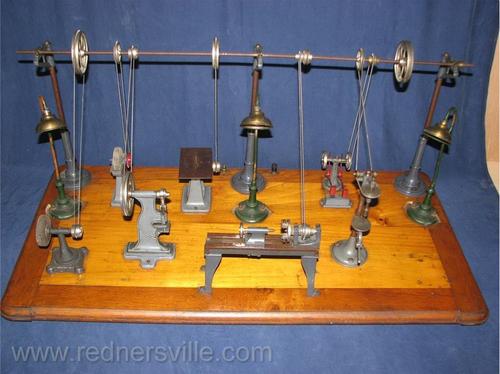
BoingBoing apparently thinks this little line-shaft workshop is bizarre and incredible. Maybe. But I had one of these as a kid in the 1980s; it went with a Mamod steam engine, and had various tiny machine tools - a press, a pillar drill, a buffing wheel, and eventually we rigged a little dynamo to have it generate electricity, thus making the hop from the first industrial revolution and mill buildings to the second and electric motors. (Have I mentioned I once worked in a printing plant in Shipley - this was in the summer of 2000 - where the machinery came from Germany in 1963...East Germany?)
And it rocked, especially because it filled the house with the unique smell of live steam and hot oil. Oh, and that time I fired it up without my dad being around, with the result that the safety valve wasn't quite correctly seated, and extremely hot steam under pressure launched it into the fucking ceiling? Sorry, mum. But technology ought to scare you occasionally, right?
Surely they can't have been that rare. Here's a quote from the comments at BB:
Inspired by my Grandfather I built my own peripheral for it. BTW, it had a standard, open interface for everyone to hook up their own shit to the engine... it was a drive wheel, hooked up to the flywheel where you could place a rubber band and drive anything you could imagine. I chose to drive a tiny Electric Motor, that was hooked up to a flashlight bulb. It just might have started my ongoing involvement with science.Yes, I did that too; I think the aim was trying to build up enough steam pressure to overload and burn out the bulb. If I had really been militant about it, I suppose I should have thought of some way to link it with the ZX Spectrum, but I don't think it put out enough wallop even to drive one of those.
And I never finished the rocket-propelled boat, even though I did get as far as cutting and soldering tin plate sections (more than the joint forces of the Government, BAE, Thales, Vosper Thorneycroft and Babcocks Rosyth can say for CVF).
Sunday, April 20, 2008
The Bombardment of Walthamstow Rages On
This NYT story is nonsense. Various rightwing barkies have taken the opportunity of the French armed forces' deliciously 007-esque mission to rescue the sailing yacht Le Ponant to tout the following story around the media: the Royal Navy has been ordered not to detain pirates under any circumstances, for fear that they might something or other, because of the Human Rights Act. The details are opportunely left open; the usual formation of the story makes only two testable claims, one of which is that landing a captured pirate in Somalia would likely be illegal because the local authorities might cut their head off, and the other being that the pirate might claim political asylum aboard ship.
What the story does not actually say is why this would stop anyone from detaining pirates, or for that matter why the same doesn't go for the French. After all, as a State party to the European Convention on Human Rights, France has the same legal obligations. Now, the first claim is obviously true in the sense that yes, Virginia, Somalia is a nasty failed state run by a mix of more-or-less Islamist warlords and Ethiopian army officers. Handing someone over to this lot for trial might well be illegal. But has nobody else noticed that it would also be intensely, profoundly stupid?
Who on earth would want to return captured pirates to the state, or rather un-state, that permitted them to operate openly from their territory? Even if the Somali authority they were returned to actually wanted to try them, you've got to assume there's a significant chance of them getting away. In fact, the French mission gives us all the information we need; the pirates collected the ransom, went ashore, and seem to have planned just to drive off with it, which doesn't inspire confidence in local law enforcement.
Further, there is no legal reason whatsoever to give pirates captured off Somalia to the Somali police. Pirates have a special status in international law they share with slavers, torturers and those responsible for genocide; they are hostes humanae generis, enemies of all humanity, which in practice means that any state that can catch them has effective jurisdiction in the case. Once the pirates are caught, there is absolutely no reason not to take them to a proper court back in London, or wherever. That given, why should we need to even think about handing them over to a jurisdiction where they might escape, be tortured, or be put to death?
The second testable claim is that a captured pirate might claim political asylum. This is true. A longstanding principle of the law of the sea is that of exclusive flag state jurisdiction, which means that a warship of state A is for all intents and purposes part of A's national territory. The principle holds in a weaker form for merchant vessels. Americans really ought to be conscious of this, because they fought a war against Britain in part over the principle.
Now, a story. When I took my MSc in 2003-2004, my International Law course was taught by Commander Steven Haines, who had just resigned from his post as a senior legal adviser to the Royal Navy, round about the same time Elizabeth Wilmshurst walked out of her similar post at the Foreign Office. In fact, I heard Wilmshurst's name for the first time from him. He didn't give his reasons, but do I need to draw you a fucking diagram? (He's also the only person I know who ever had control of a nuclear weapon. Cool, eh? Pity he took so bloody long to mark essays.)
Haines took part in the 2000 intervention in Sierra Leone, where he was involved in the decision as to what to do with limb-choppin' war criminal Foday Sankoh after his capture. The military were keen to fly him straight out to Illustrious, as he's not known for being a great swimmer and would be very unlikely to escape; Haines opposed the idea on the grounds that he might claim political asylum, which would have been politically more than problematic. Instead he was confined at the airport and then in the Freetown police station with a guard reinforced with British troops, but later cheated the courts by dying before he could be brought to trial.
So the problem is not new, but it's not like it helped Sankoh any. And there is no reason why some one can't spend their political asylum in prison; it doesn't confer immunity for one's crimes, and piracy is a crime. (That is both bathetically and pathetically obvious, but there is an important point here which we'll come back to.)
To recap: yes, it would be illegal to hand over a pirate to Somali warlords for trial. No, this does not constrain anyone in catching pirates, because anyone who can catch them can try them. And frankly, not handing prisoners to the Somali "government" is a feature, not a bug. Yes, you can claim asylum aboard a foreign warship; no, this is no deal-breaker.
So what did those thrillingly tough and macho Frenchmen do with their six captured buccaneers? They, after all, aren't letting themselves have their national essence sapped by do-gooding lawyers and bickering parliamentarians' quibbles, right? Up to the yard-arm? Walk the plank? Hand them to the fun-loving fellas from Ethiopian Military Intelligence? Er, no.
Far too many people who should know better have swallowed this transparent bollocks at face value, or indeed, at a considerable premium. For example: here's Information Dissemination getting it wrong. Here's Abu Muqawama getting it wrong. Here's Abu Muq getting it wrong again after initial treatment. I don't have the stomach to look into the fever swamp.
So why, do you think, is this story being pushed so hard? The ur-text is this Times article, which consists of pure assertion - there is no information in there implying the central claim, that the RN has been ordered not to detain pirates - and a quote from swivel-eyed Tory Julian Brazer MP apparently reacting to the Times reporter. Repeat it a few times, and voila; new facts.
But who, pray, is keen on demonising the very idea of law as a constraint on state action? Try this comment at AM:
By the way: as well as the Reuters report, Liberation has photos and commentary from the guy who runs Secret Defense.
Update: I'd forgotten that the original Captain Kidd was commissioned by the Navy to hunt down other pirates. He was a countergang that went wrong. Now there's a far better lesson for you.
What the story does not actually say is why this would stop anyone from detaining pirates, or for that matter why the same doesn't go for the French. After all, as a State party to the European Convention on Human Rights, France has the same legal obligations. Now, the first claim is obviously true in the sense that yes, Virginia, Somalia is a nasty failed state run by a mix of more-or-less Islamist warlords and Ethiopian army officers. Handing someone over to this lot for trial might well be illegal. But has nobody else noticed that it would also be intensely, profoundly stupid?
Who on earth would want to return captured pirates to the state, or rather un-state, that permitted them to operate openly from their territory? Even if the Somali authority they were returned to actually wanted to try them, you've got to assume there's a significant chance of them getting away. In fact, the French mission gives us all the information we need; the pirates collected the ransom, went ashore, and seem to have planned just to drive off with it, which doesn't inspire confidence in local law enforcement.
Further, there is no legal reason whatsoever to give pirates captured off Somalia to the Somali police. Pirates have a special status in international law they share with slavers, torturers and those responsible for genocide; they are hostes humanae generis, enemies of all humanity, which in practice means that any state that can catch them has effective jurisdiction in the case. Once the pirates are caught, there is absolutely no reason not to take them to a proper court back in London, or wherever. That given, why should we need to even think about handing them over to a jurisdiction where they might escape, be tortured, or be put to death?
The second testable claim is that a captured pirate might claim political asylum. This is true. A longstanding principle of the law of the sea is that of exclusive flag state jurisdiction, which means that a warship of state A is for all intents and purposes part of A's national territory. The principle holds in a weaker form for merchant vessels. Americans really ought to be conscious of this, because they fought a war against Britain in part over the principle.
Now, a story. When I took my MSc in 2003-2004, my International Law course was taught by Commander Steven Haines, who had just resigned from his post as a senior legal adviser to the Royal Navy, round about the same time Elizabeth Wilmshurst walked out of her similar post at the Foreign Office. In fact, I heard Wilmshurst's name for the first time from him. He didn't give his reasons, but do I need to draw you a fucking diagram? (He's also the only person I know who ever had control of a nuclear weapon. Cool, eh? Pity he took so bloody long to mark essays.)
Haines took part in the 2000 intervention in Sierra Leone, where he was involved in the decision as to what to do with limb-choppin' war criminal Foday Sankoh after his capture. The military were keen to fly him straight out to Illustrious, as he's not known for being a great swimmer and would be very unlikely to escape; Haines opposed the idea on the grounds that he might claim political asylum, which would have been politically more than problematic. Instead he was confined at the airport and then in the Freetown police station with a guard reinforced with British troops, but later cheated the courts by dying before he could be brought to trial.
So the problem is not new, but it's not like it helped Sankoh any. And there is no reason why some one can't spend their political asylum in prison; it doesn't confer immunity for one's crimes, and piracy is a crime. (That is both bathetically and pathetically obvious, but there is an important point here which we'll come back to.)
To recap: yes, it would be illegal to hand over a pirate to Somali warlords for trial. No, this does not constrain anyone in catching pirates, because anyone who can catch them can try them. And frankly, not handing prisoners to the Somali "government" is a feature, not a bug. Yes, you can claim asylum aboard a foreign warship; no, this is no deal-breaker.
So what did those thrillingly tough and macho Frenchmen do with their six captured buccaneers? They, after all, aren't letting themselves have their national essence sapped by do-gooding lawyers and bickering parliamentarians' quibbles, right? Up to the yard-arm? Walk the plank? Hand them to the fun-loving fellas from Ethiopian Military Intelligence? Er, no.
Six pirates sont transférés à bord de la frégate Jean Bart et ils seront remis à la justice pour être jugés en France.So yes, the six pirates were brought aboard the Jean Bart and will be tried in France.
Far too many people who should know better have swallowed this transparent bollocks at face value, or indeed, at a considerable premium. For example: here's Information Dissemination getting it wrong. Here's Abu Muqawama getting it wrong. Here's Abu Muq getting it wrong again after initial treatment. I don't have the stomach to look into the fever swamp.
So why, do you think, is this story being pushed so hard? The ur-text is this Times article, which consists of pure assertion - there is no information in there implying the central claim, that the RN has been ordered not to detain pirates - and a quote from swivel-eyed Tory Julian Brazer MP apparently reacting to the Times reporter. Repeat it a few times, and voila; new facts.
But who, pray, is keen on demonising the very idea of law as a constraint on state action? Try this comment at AM:
Ultimately the very notion of law itself may be bought into disrepute. As it is already in the ranks of the American forces.See? It's those bastard lawyers who MADE us torture them. Indeed it was; just not the same ones. This kind of embrace of raison d'etat has something of the power of all the ideas of a liberation from freedom about it.
By the way: as well as the Reuters report, Liberation has photos and commentary from the guy who runs Secret Defense.
Update: I'd forgotten that the original Captain Kidd was commissioned by the Navy to hunt down other pirates. He was a countergang that went wrong. Now there's a far better lesson for you.
Friday, April 04, 2008
Torture Lawyers
If you can read you should read this if you read nothing else this decade. It's all about how the Americans started torturing people, whose idea it was, how men like John Yoo came to provide the legal justifications, who was keen (the ideological core of the administration), who didn't want to know (the FBI and, curiously, the US Navy's Criminal Investigative Service). It is intensely depressing, and the only hope in it is the precedent from Nuremberg that a lawyer who is involved in a war crime in their legal capacity can be just as guilty as the torturer.
Here's the most significant bit, if that means anything at this level of degradation:
Addington. Addington. At every ugly hinge of the Bush years, he's there. I'd never heard of him until at least 2006, when the Stiftung turned me on to the story. I wonder if he was a member of the White House Iraq Group? Another one we never cleared up.
This depresses me for other reasons; at the end of 2001, I was just about still prepared to defend them. I never imagined they would want to keep the prisoners indefinitely; better in their hands than those of the Northern Alliance, right? The penny finally dropped for me with the decision to refuse them POW status in early 2002. But looking back, should I have been angrier earlier? Not that it would have helped; but I do think I consistently underestimated them. I was always opposed to Iraq - but right up to the end I didn't really believe they meant it.
It seemed so crazed, the only explanation I could think of was that it was an exercise in madman theory (and you all know what I think of that); once the inspectors went back in, and they started cutting up rockets and flying Mirage F1-CR recce planes, wouldn't this be the end? Or at least, wouldn't it be enough for us? What I didn't realise, of course, was that they wanted war for reasons that had very little to do with the war; for Blair it was presumably to cling to the US. And for Addington?
His significance, I think, is that it's all been about law; they wanted and dreamed of escaping the constraints of the legal state, and no wonder they started at the top.
Update: Pathos to bathos in a flash. Yes, that should have been John Yoo, not Woo. Perhaps they should have hired John Woo; he'd have danced round his own arse on the tip of a Tomahawk missile while chop-socking Addington into diced wanker and collapsing Osama's occiput with a diamond-edged writ. They'd have told all they knew, willingly.
Here's the most significant bit, if that means anything at this level of degradation:
On September 25, as the process of elaborating new interrogation techniques reached a critical point, a delegation of the administration’s most senior lawyers arrived at Guantánamo. The group included the president’s lawyer, Alberto Gonzales, who had by then received the Yoo-Bybee Memo; Vice President Cheney’s lawyer, David Addington, who had contributed to the writing of that memo; the C.I.A.’s John Rizzo, who had asked for a Justice Department sign-off on individual techniques, including waterboarding, and received the second (and still secret) Yoo-Bybee Memo; and Jim Haynes, Rumsfeld’s counsel. They were all well aware of al-Qahtani. “They wanted to know what we were doing to get to this guy,” Dunlavey told me, “and Addington was interested in how we were managing it.” I asked what they had to say. “They brought ideas with them which had been given from sources in D.C.,” Dunlavey said. “They came down to observe and talk.” Throughout this whole period, Dunlavey went on, Rumsfeld was “directly and regularly involved.”
Beaver confirmed the account of the visit. Addington talked a great deal, and it was obvious to her that he was a “very powerful man” and “definitely the guy in charge,” with a booming voice and confident style. Gonzales was quiet. Haynes, a friend and protégé of Addington’s, seemed especially interested in the military commissions, which were to decide the fate of individual detainees. They met with the intelligence people and talked about new interrogation methods. They also witnessed some interrogations.
Addington. Addington. At every ugly hinge of the Bush years, he's there. I'd never heard of him until at least 2006, when the Stiftung turned me on to the story. I wonder if he was a member of the White House Iraq Group? Another one we never cleared up.
This depresses me for other reasons; at the end of 2001, I was just about still prepared to defend them. I never imagined they would want to keep the prisoners indefinitely; better in their hands than those of the Northern Alliance, right? The penny finally dropped for me with the decision to refuse them POW status in early 2002. But looking back, should I have been angrier earlier? Not that it would have helped; but I do think I consistently underestimated them. I was always opposed to Iraq - but right up to the end I didn't really believe they meant it.
It seemed so crazed, the only explanation I could think of was that it was an exercise in madman theory (and you all know what I think of that); once the inspectors went back in, and they started cutting up rockets and flying Mirage F1-CR recce planes, wouldn't this be the end? Or at least, wouldn't it be enough for us? What I didn't realise, of course, was that they wanted war for reasons that had very little to do with the war; for Blair it was presumably to cling to the US. And for Addington?
His significance, I think, is that it's all been about law; they wanted and dreamed of escaping the constraints of the legal state, and no wonder they started at the top.
Update: Pathos to bathos in a flash. Yes, that should have been John Yoo, not Woo. Perhaps they should have hired John Woo; he'd have danced round his own arse on the tip of a Tomahawk missile while chop-socking Addington into diced wanker and collapsing Osama's occiput with a diamond-edged writ. They'd have told all they knew, willingly.
Wednesday, March 19, 2008
Two cows
He imagined that satellite broadcasting might help a hundred Indian villages save two cows a year and understood what an impact that might have. Says a commenter at PZ Myers' place, on the occasion of Arthur C. Clarke's death. Two cows a year; now that's genius. I can't presume to say whether this came true; I don't have any data on satellites and Bos indicus. But I do have some numbers on fish.
Brough Turner likes to keep track of this stuff, and here's an actual peer-reviewed study. You can get a presentation version here (pdf). On the coast of Kerala, not all that far from Clarke's home, mobile phone networks deployed in stages down the coast between 1997 and 2000; this graph shows what happened next.

Price is on the Y axis, time on the X. Not just that, but the improvement in allocative efficiency led to an 8% increase in the fishermen's profits and a 4% drop in the price to the customer; at the same time, the quantity of fish going to waste went down from 6% of the catch to near zero.

VSAT.

Ericsson RBS2111.
I was given Of Time and Stars as a very little boy; I am frankly terrified by the number of people posting all over the Web to say how much it inspired them with the sense of wonder and joy of science...what future was it preparing us for?
Brough Turner likes to keep track of this stuff, and here's an actual peer-reviewed study. You can get a presentation version here (pdf). On the coast of Kerala, not all that far from Clarke's home, mobile phone networks deployed in stages down the coast between 1997 and 2000; this graph shows what happened next.
Price is on the Y axis, time on the X. Not just that, but the improvement in allocative efficiency led to an 8% increase in the fishermen's profits and a 4% drop in the price to the customer; at the same time, the quantity of fish going to waste went down from 6% of the catch to near zero.
VSAT.
Ericsson RBS2111.
I was given Of Time and Stars as a very little boy; I am frankly terrified by the number of people posting all over the Web to say how much it inspired them with the sense of wonder and joy of science...what future was it preparing us for?
Sunday, February 17, 2008
Very Short 90s
Yes, I miss Melody Maker too, for most of the same reasons. And The Face.
Look, at least there are no rockets in this post. So you get a gratuitious Justin Robertson track.
Look, at least there are no rockets in this post. So you get a gratuitious Justin Robertson track.
Sunday, January 20, 2008
Open up my eager eyes...I'm Mr Brightside
Ken Livingstone is surely unelectable now, sez one of the sinister faceless committee/gaggle of sockpuppets attached to Daniel Davies that is Aaronovitch Watch. Jesus, I hope not; the prospect of Boris Johnson being put in charge of London is too much to contemplate. Consider this; Ken brought a load of old hard-left mates with him to City Hall as advisors, many of whom have done the old Stafford Cripps/Ernie Bevin trick of shocking with your politics while impressing with your abilities as a technocrat. Personally, I hope to make this the subtitle of my life, so you can see why I'm sympathetic.
However, can anyone imagine the kind of rightwing maniacs and snake oil merchants piccaninny boy will bring in with him? I have a horrible feeling about this; but at least there is a reasonable chance the mayoral feedback loop is short enough to deal with him, thanks to all the Tory-invented ways of harassing members of local government that don't exist at Westminster.
National government, not so much; it seems to be unavoidable that once you're in, you're in for 10 years, which means that you can do so much damage that it's arguable voting at all is irresponsible. And even the blogosphere doesn't look likely to mobilise to the degree it did in 2005; the degree of participation and anger of the late 90s seems a million miles away. From road protestors to rate tarts was only one election. Maybe I'm getting old, but I'm struggling to prepare my personal culture for the prospect of a Tory administration, especially after all the effort I put in since 2003 to demonise this lot.
Still, there are small wins; the Respect Unit bites the dust, as does e-voting. And the government's astonishing informational incontinence is helping. A lot. But whether there's any hope for a basically decent government is another matter. Perhaps I'm going to go through the rest of my life stacking up yet more unresolved injustices; hell, the list already goes back 20 years.
However, can anyone imagine the kind of rightwing maniacs and snake oil merchants piccaninny boy will bring in with him? I have a horrible feeling about this; but at least there is a reasonable chance the mayoral feedback loop is short enough to deal with him, thanks to all the Tory-invented ways of harassing members of local government that don't exist at Westminster.
National government, not so much; it seems to be unavoidable that once you're in, you're in for 10 years, which means that you can do so much damage that it's arguable voting at all is irresponsible. And even the blogosphere doesn't look likely to mobilise to the degree it did in 2005; the degree of participation and anger of the late 90s seems a million miles away. From road protestors to rate tarts was only one election. Maybe I'm getting old, but I'm struggling to prepare my personal culture for the prospect of a Tory administration, especially after all the effort I put in since 2003 to demonise this lot.
Still, there are small wins; the Respect Unit bites the dust, as does e-voting. And the government's astonishing informational incontinence is helping. A lot. But whether there's any hope for a basically decent government is another matter. Perhaps I'm going to go through the rest of my life stacking up yet more unresolved injustices; hell, the list already goes back 20 years.
Friday, June 15, 2007
Four More Years!
I nearly forgot. It's four years and five days since the very first post on this weblog. And it's Magna Carta day! To mark the blog's anniversary, I'd like some of the lurkers to stick their heads out from their stones. Who are you all?
Sunday, May 20, 2007
Dan predicts a riot
Responding to Dan Hardie's latest BNP screed, I think there are several important points here. First of all, Dan Dsquared is half-right that BNP voters don't matter. There are not enough of them ever to get elected to run anything, and their candidates usually manage to teach their own electors a lesson about voting for nutcases with impressive speed. He is also right that it is a much more serious problem that there are significant numbers of racists about than that they vote BNP.
He is wrong, though, that this is a nonproblem. Quite simply, you don't need many people to cause serious trouble, and the BNP as an organisation is good at this. It has repeatedly shown itself willing to advocate violence, and also to use what can only be described as tactical psychological warfare. This is not a serious problem in some places, but it could be a very serious one where there are concentrations of BNP wankers near concentrations of target groups, and a really, really serious problem where there are concentrations of BNP wankers near concentrations of jihadi wankers.
Part of the problem, and something that the usually statistically sharp Dsquared doesn't pick out, is that even council-level statistical aggregates don't give enough granularity to track this. Further, the government doesn't have a good record in terms of situational awareness outside London - the fuel wankers of 2000 caused as much trouble as they did largely because the crisis didn't begin in London, and the 2001 riots similarly took everyone by surprise.
Not that it was very obvious in the north that something was up - I remember the Bradford Mela a week beforehand going on in near-perfect peace under the usual racing charcoal sky. The reaction loop, though, is a lot shorter than that of national politics or administration.
My own experience of the Bradford riot really bears all these points out. That morning, I was on my way to an ANL demonstration against the planned BNP march. All was reasonably calm, and the main news story in Yorkshire was mild indignation that the Bradford Festival's last day had been cancelled due to the demo. There are a lot of different stories about the kick-off, but my own recall was this - during the afternoon, there had been no sign of the BNP, but a succession of rumours that They Were Coming!, each of which set the crowd bubbling. I remember that there was a sudden ugly surge as a group of men with short hair appeared, who turned out to be from the No Platforms campaign rather than the BNP.
During the day, the composition of the crowd had gradually altered from a lot of teacherish ANL types, some Pakistanis, and some professional lefties, to a lot of young men and the professional lefties. I don't remember anyone who looked especially Islamic - most of them looked like they came from your friendly local Subaru tune-up joint. I didn't, as it happened, see a single fascist all day - eventually, around 4 o'clock, I assumed my civic duty was done and headed for the station. I'd just seen the leader of Bradford Council making a speech, so I figured it must be all over.
It was at that moment that the trouble began. Suddenly the police who had pulled back to their vehicles in Market Street began struggling into their kit, radios quacking. And then there was a horrible yelling, and I saw a crowd dashing out of Centenary Square towards the bottom of Ivegate, led by a folk singer I'd been talking to earlier with his guitar on his back. Then, I looked up Ivegate to see the mob turn and rush back down the hill towards me. At this point I started running away, looking up to see I was running right towards a line of cops with dogs. They didn't molest me as I swung left into Hustlergate to let the mob pass.
After that, I helped the folk singer, who was complaining bitterly that the cops had grabbed him by his bad shoulder and he was disabled, over to a St John's Ambulance post, and decided to get out of town on the next train, which turned out to be the last train allowed to leave the station.
The other thing about the day that sticks in my mind was that I had earlier been interviewed by a German TV crew. I made the obvious points that the BNP and the NF before had never been allowed to get a footing in Bradford, etc. The producer suggested they interview me with "any of your Asian friends", and I had to confess I had none. Which would probably have made the best possible reportage on the whole sad business, had they gone ahead and filmed it.
If you want something more useful, I'd point out that the good news is that in Yorkshire, the BNP's successes have so far been in the urban-rural periphery. Not to be confused with the suburbs, it's a feature of Yorkshire urban geography that we have a lot of smaller chunks of industrial or post-industrial town that overlap with the countryside. It's these semidetached areas, like Cross Flatts as opposed to Keighley, where they tend to do well. I suspect this may be a stabilising factor.
He is wrong, though, that this is a nonproblem. Quite simply, you don't need many people to cause serious trouble, and the BNP as an organisation is good at this. It has repeatedly shown itself willing to advocate violence, and also to use what can only be described as tactical psychological warfare. This is not a serious problem in some places, but it could be a very serious one where there are concentrations of BNP wankers near concentrations of target groups, and a really, really serious problem where there are concentrations of BNP wankers near concentrations of jihadi wankers.
Part of the problem, and something that the usually statistically sharp Dsquared doesn't pick out, is that even council-level statistical aggregates don't give enough granularity to track this. Further, the government doesn't have a good record in terms of situational awareness outside London - the fuel wankers of 2000 caused as much trouble as they did largely because the crisis didn't begin in London, and the 2001 riots similarly took everyone by surprise.
Not that it was very obvious in the north that something was up - I remember the Bradford Mela a week beforehand going on in near-perfect peace under the usual racing charcoal sky. The reaction loop, though, is a lot shorter than that of national politics or administration.
My own experience of the Bradford riot really bears all these points out. That morning, I was on my way to an ANL demonstration against the planned BNP march. All was reasonably calm, and the main news story in Yorkshire was mild indignation that the Bradford Festival's last day had been cancelled due to the demo. There are a lot of different stories about the kick-off, but my own recall was this - during the afternoon, there had been no sign of the BNP, but a succession of rumours that They Were Coming!, each of which set the crowd bubbling. I remember that there was a sudden ugly surge as a group of men with short hair appeared, who turned out to be from the No Platforms campaign rather than the BNP.
During the day, the composition of the crowd had gradually altered from a lot of teacherish ANL types, some Pakistanis, and some professional lefties, to a lot of young men and the professional lefties. I don't remember anyone who looked especially Islamic - most of them looked like they came from your friendly local Subaru tune-up joint. I didn't, as it happened, see a single fascist all day - eventually, around 4 o'clock, I assumed my civic duty was done and headed for the station. I'd just seen the leader of Bradford Council making a speech, so I figured it must be all over.
It was at that moment that the trouble began. Suddenly the police who had pulled back to their vehicles in Market Street began struggling into their kit, radios quacking. And then there was a horrible yelling, and I saw a crowd dashing out of Centenary Square towards the bottom of Ivegate, led by a folk singer I'd been talking to earlier with his guitar on his back. Then, I looked up Ivegate to see the mob turn and rush back down the hill towards me. At this point I started running away, looking up to see I was running right towards a line of cops with dogs. They didn't molest me as I swung left into Hustlergate to let the mob pass.
After that, I helped the folk singer, who was complaining bitterly that the cops had grabbed him by his bad shoulder and he was disabled, over to a St John's Ambulance post, and decided to get out of town on the next train, which turned out to be the last train allowed to leave the station.
The other thing about the day that sticks in my mind was that I had earlier been interviewed by a German TV crew. I made the obvious points that the BNP and the NF before had never been allowed to get a footing in Bradford, etc. The producer suggested they interview me with "any of your Asian friends", and I had to confess I had none. Which would probably have made the best possible reportage on the whole sad business, had they gone ahead and filmed it.
If you want something more useful, I'd point out that the good news is that in Yorkshire, the BNP's successes have so far been in the urban-rural periphery. Not to be confused with the suburbs, it's a feature of Yorkshire urban geography that we have a lot of smaller chunks of industrial or post-industrial town that overlap with the countryside. It's these semidetached areas, like Cross Flatts as opposed to Keighley, where they tend to do well. I suspect this may be a stabilising factor.
Thursday, May 10, 2007
Back in Bradford
Last weekend, for the first time in years. A couple of things - first of all, they're knocking down the first attempts at regeneration now, whilst a lot of the empty sites that used to be mills are still empty. The whole 60s grey tickytacky city centre is gone, leaving half a mile of rubble. Oddly, the remaining Victorian buildings seem to reassert themselves in the power vacuum, the sight lines being recreated onto the Wool Exchange and others. The changes to the street plan also have this effect - Market Street, Priestley's favourite, is a major road again. (Bet it's shit on a weekday, though.)
How did I not notice how many weird religious entities there are in town before? Not just the Muslims (although I saw tract-pushers in the city centre, something I don't remember seeing very often before), but the Scientologists and weirdo yank Christian sects. The Abundant Life people have had their supermarket-size hangar for years, but it's the first time I saw it as a religious building rather than an unusual B&Q.
What does it mean? Yorkshire has a tradition of sects, and I suppose the lag between Bradford and Leeds in the last twenty years doesn't help. I can't help seeing it as worrying, though.
How did I not notice how many weird religious entities there are in town before? Not just the Muslims (although I saw tract-pushers in the city centre, something I don't remember seeing very often before), but the Scientologists and weirdo yank Christian sects. The Abundant Life people have had their supermarket-size hangar for years, but it's the first time I saw it as a religious building rather than an unusual B&Q.
What does it mean? Yorkshire has a tradition of sects, and I suppose the lag between Bradford and Leeds in the last twenty years doesn't help. I can't help seeing it as worrying, though.
Tuesday, March 20, 2007
Cyclone Blogging: Eyewitness
So, Cyclone George tore through the old haunts, killing three people on a mining railway construction camp. Could have been worse, though - it got up to 275 Km/h.. This bloke stuck it out in South Hedland, and has photos.
Subscribe to:
Posts (Atom)